
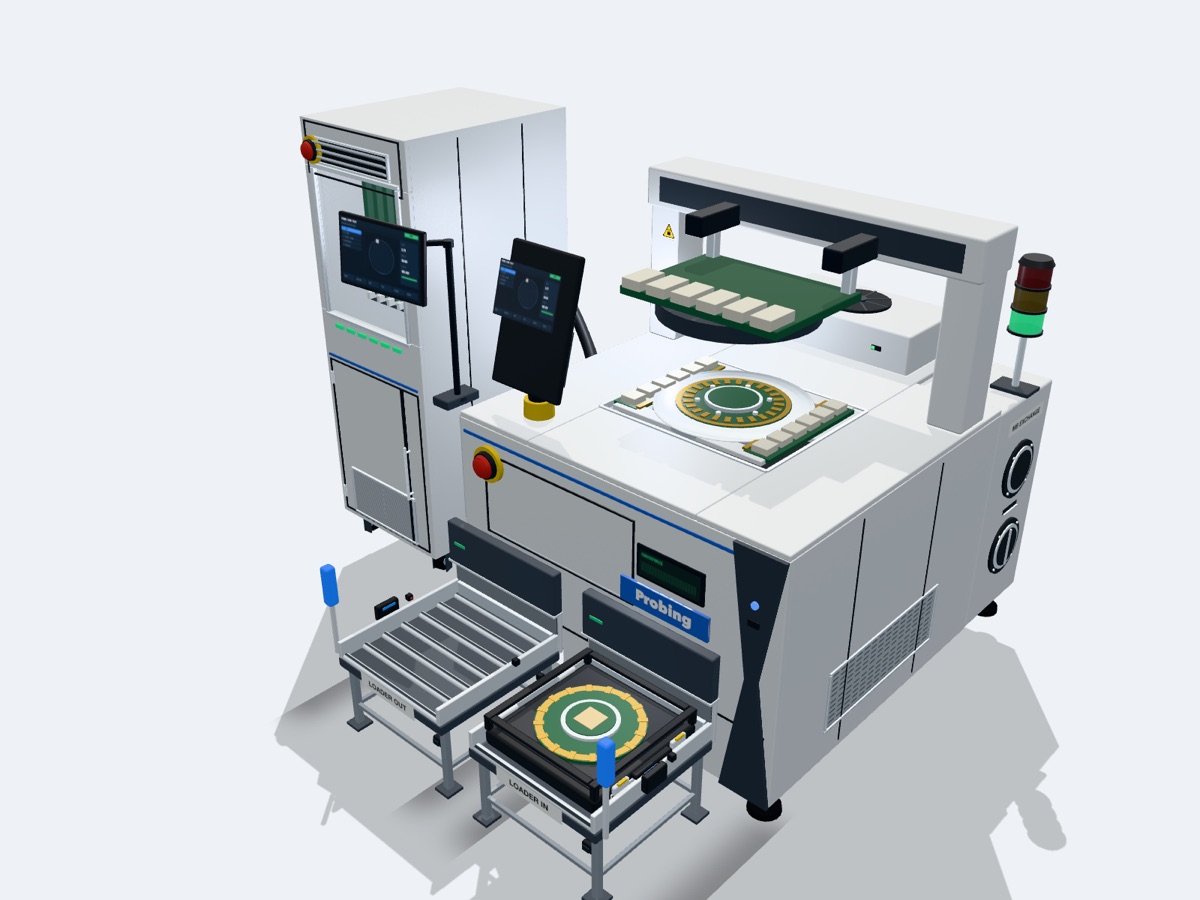
 Test and validationPCT5801 · DeepTouch1000 · motherboards · PSTA20K
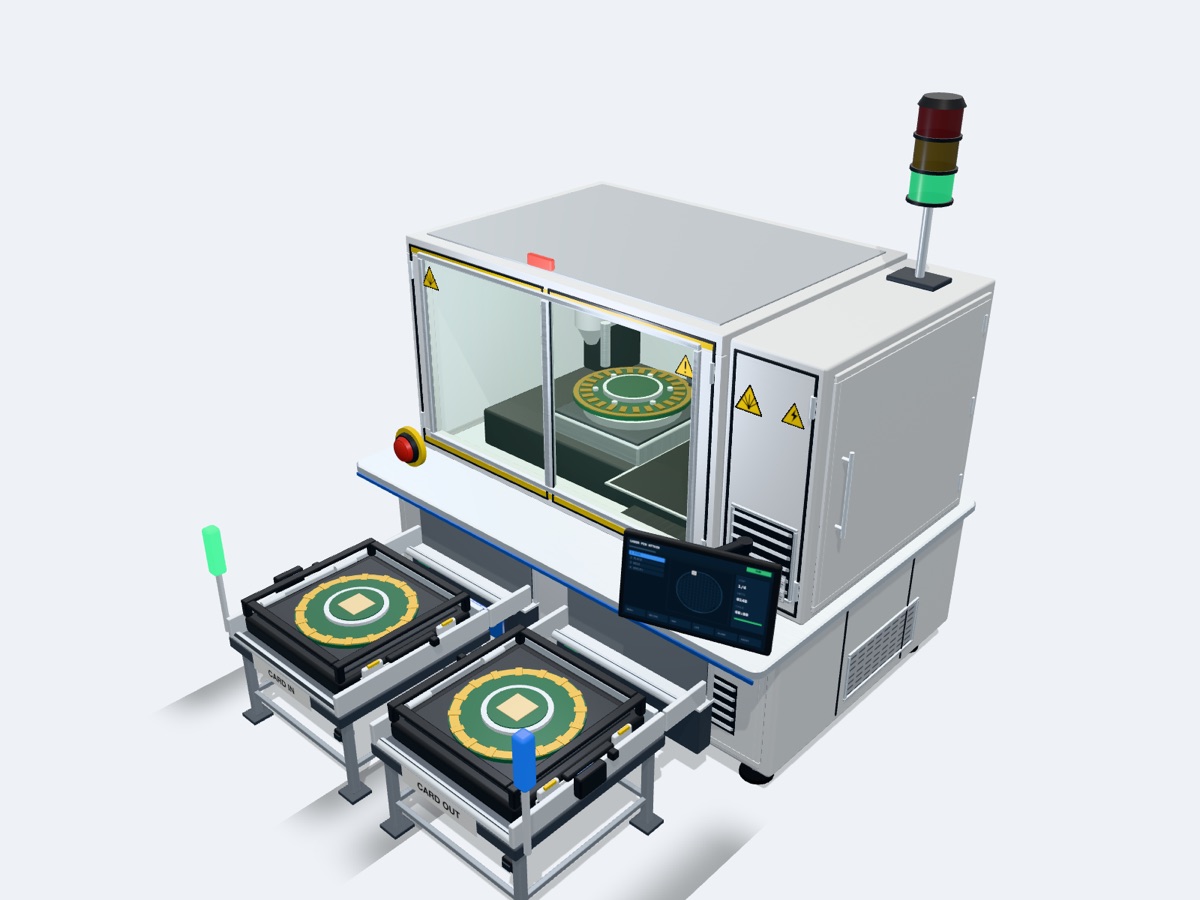 Probe assemblyProbe placement and laser micro-welding
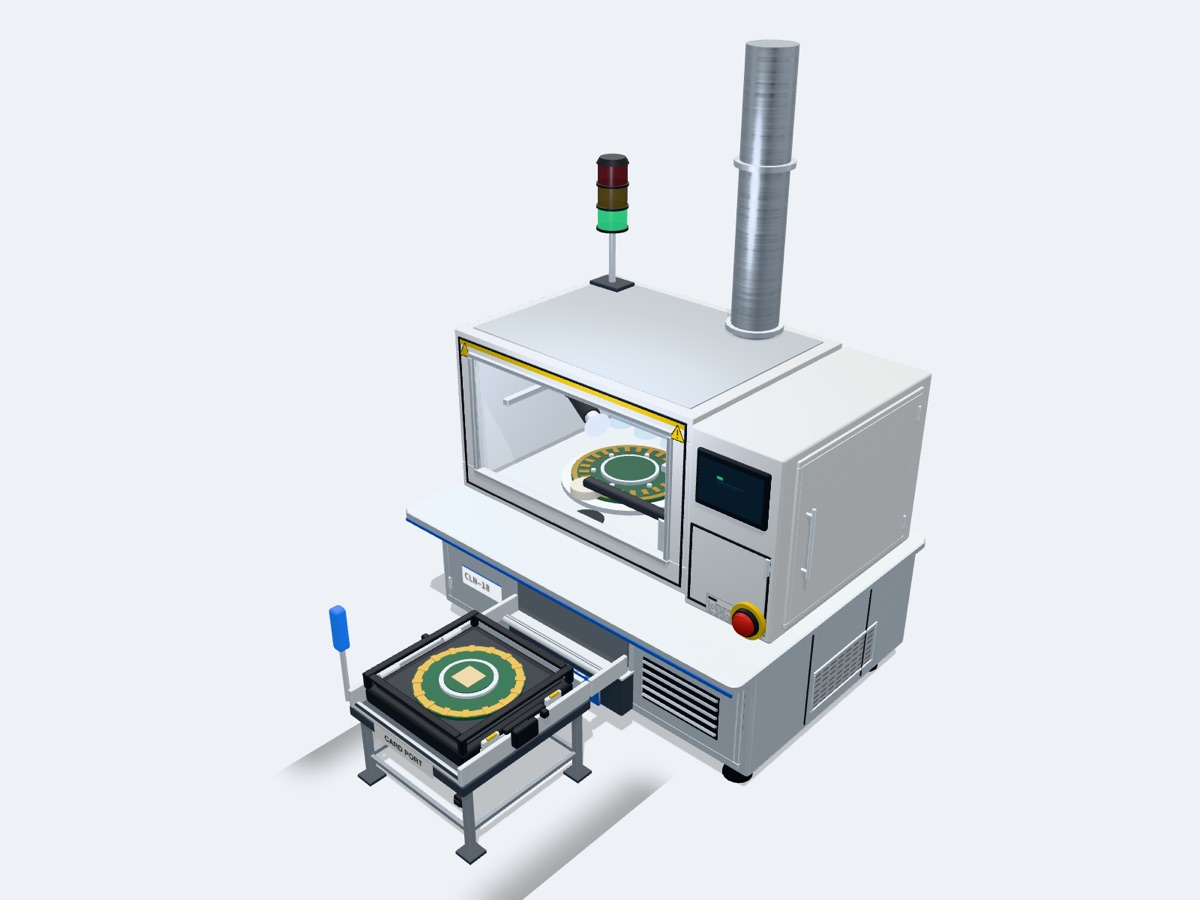 Cleaning and reinspectionCleaning and three-direction reinspection
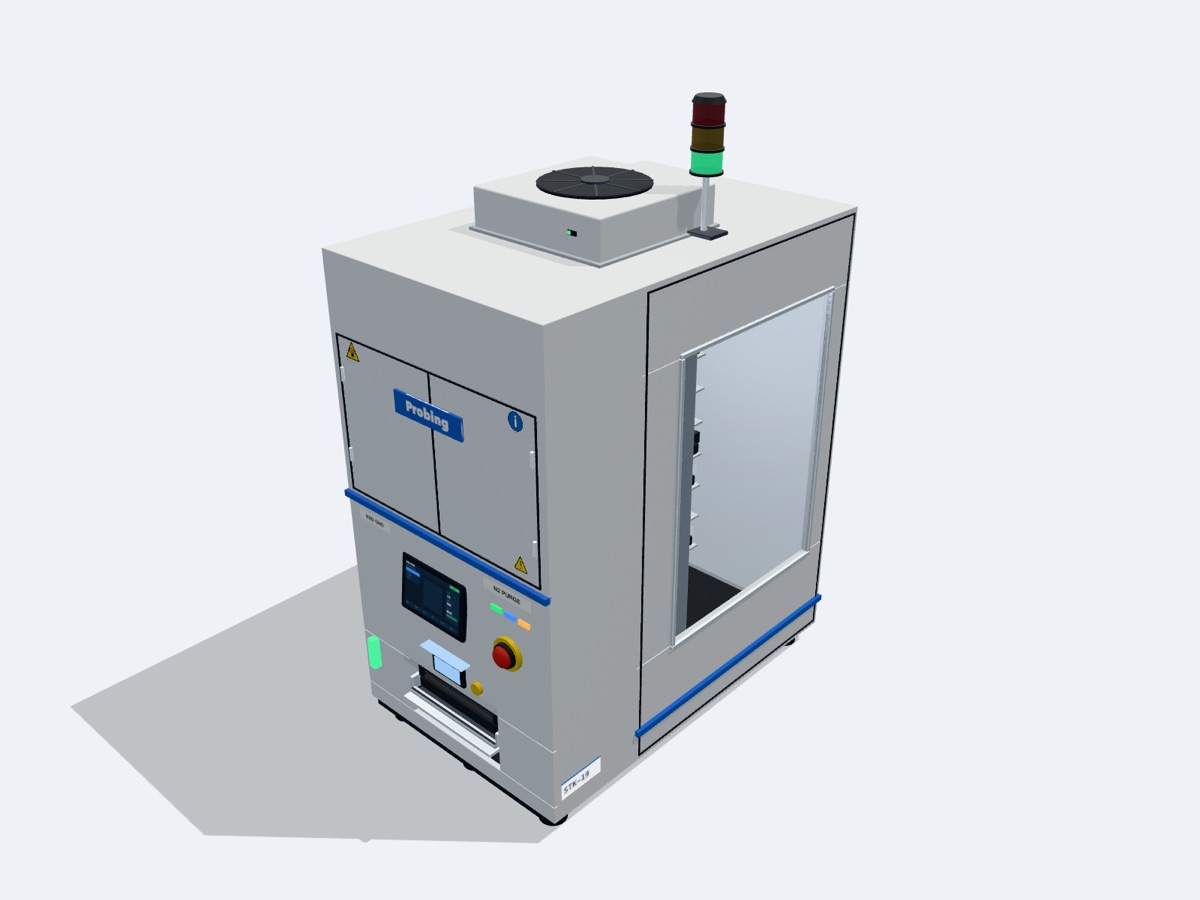 Smart storageStorage and traceability
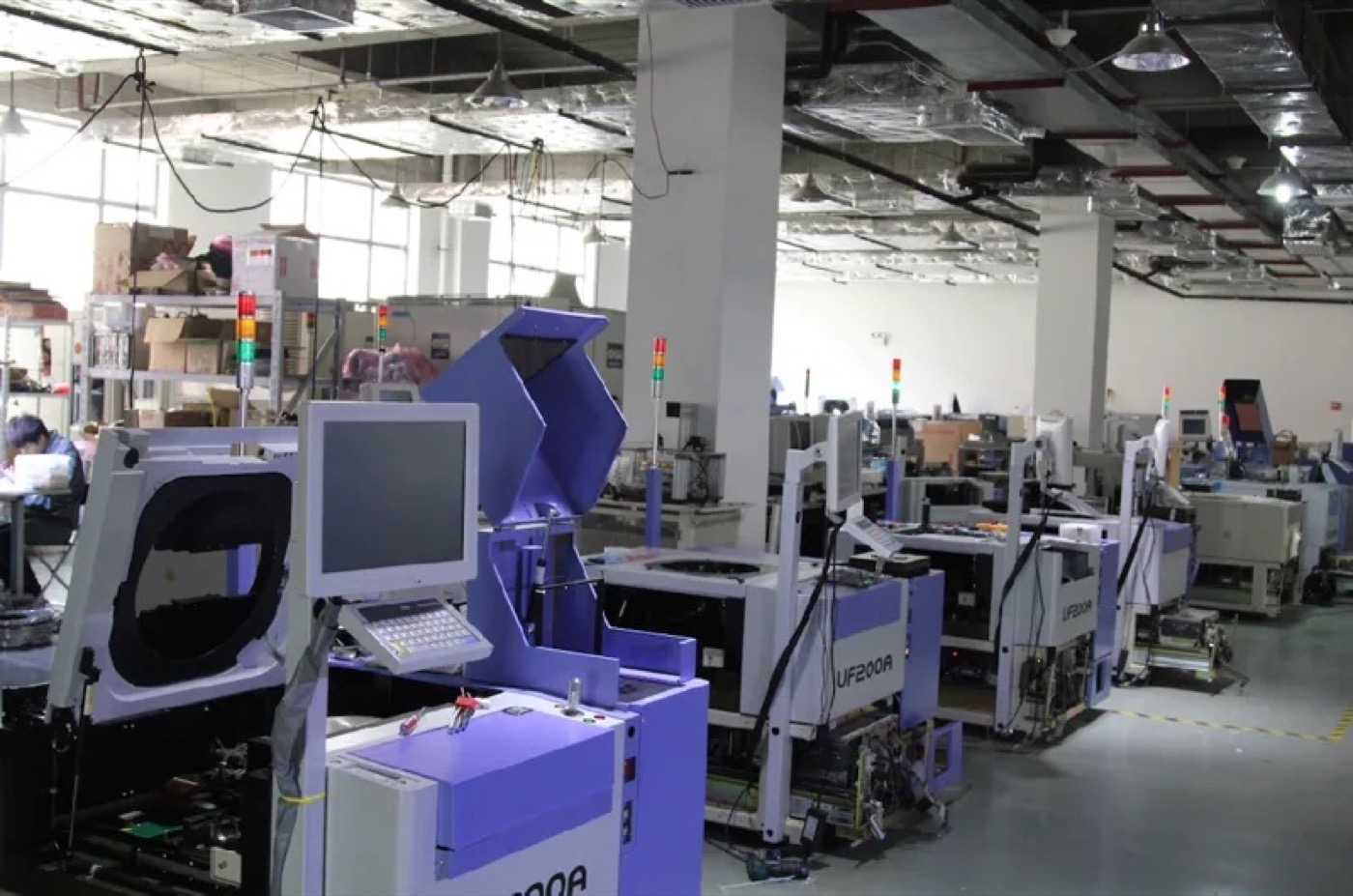 Prober servicesInformation box · uP200A · pre-owned equipment
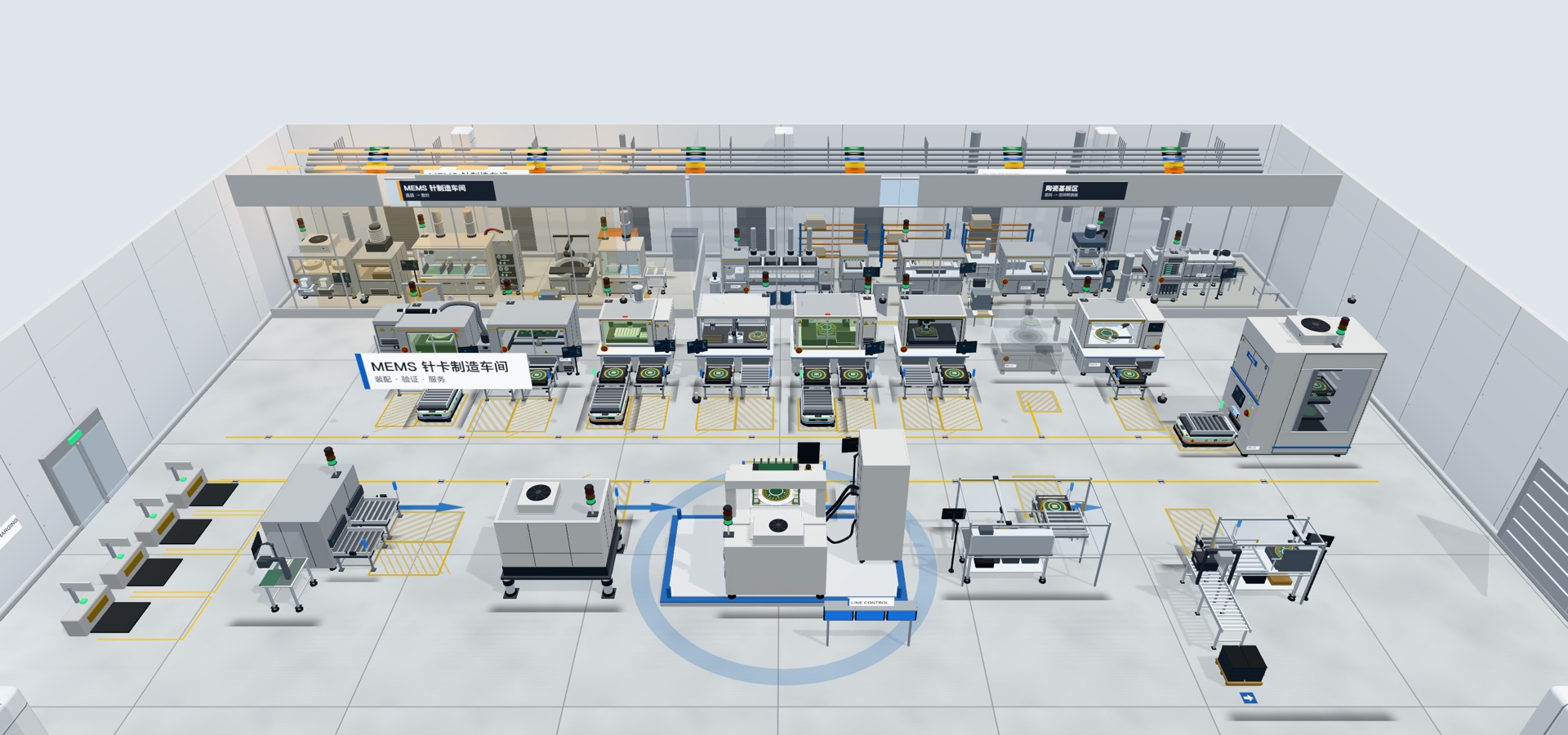 Probe-card hallMEMS probe-card manufacturing and validation · 21 stations
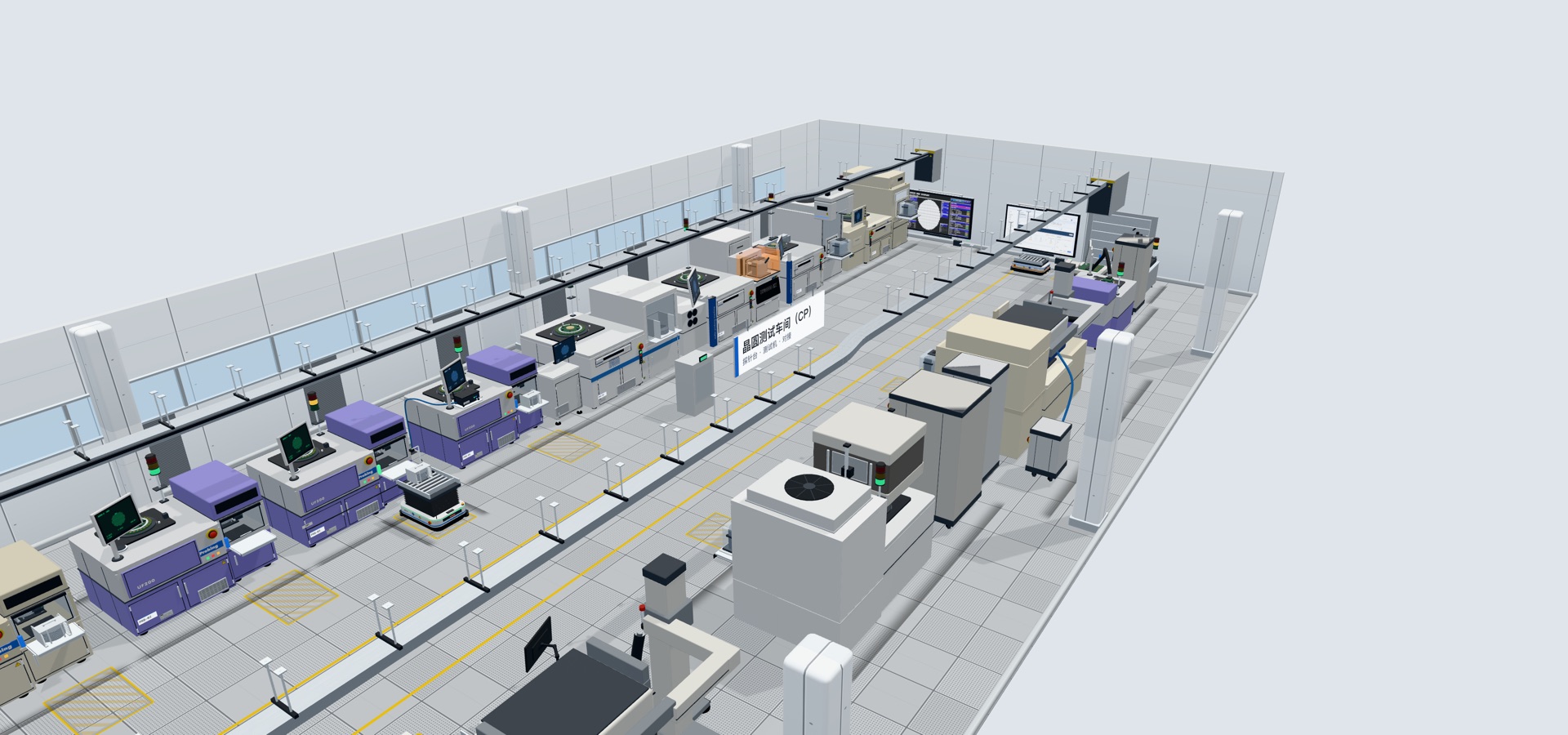 CP hallProbers, tester docking and retrofits of installed probers · 17 stations
Memory and HBM: pin count, channels and touchdown force
On a whole-wafer touchdown, an HBM card has almost twenty times the pins of a base card type. This article explains how pin count affects tester channels, test coverage and chuck force.
The device sets the pin count
The pin count of a probe card is set by the device under test. A memory probe card touches down on the whole wafer at once: 16,000 pins for the base card type and 60,000 pins for a DRAM card. For an HBM card, the pin count is almost twenty times that of the base card type.
The card-side pin capacity of the current PCT5801 platform is 67,000 pins. Cards at DRAM and HBM level are designed individually for card type, motherboard and tester interface. Pin counts in this article all mean card-side pin count.
Four quantities on one chain
Four quantities sit on one chain: card-side pin count, matrix nodes, tester channels and instrument resources.
Pins and scan paths
Card-side pin count and scan paths are two different quantities; definitions are on the terms page.
Channels and instrument resources
The basis for tester channels and instrument resources is defined on the terms page.
Test coverage down to every pin
PCT5801 runs open, short, leakage and AC tests on all pins or all channels. Leakage is tested pin to pin on all pins, with a criterion of 10 nA.
The channel capacity of the relay matrix expands with pin-count needs, and task time varies with pin count and configuration. An electrical anomaly is mapped to its coordinate on the card, and probe-tip XYZ, force and contact state then explain the physical cause.
The control signal test verifies MCW, FPGA, ASIC, I²C and SPI control resources. Analog measurement uses the Kelvin four-wire method, with DPS device power.
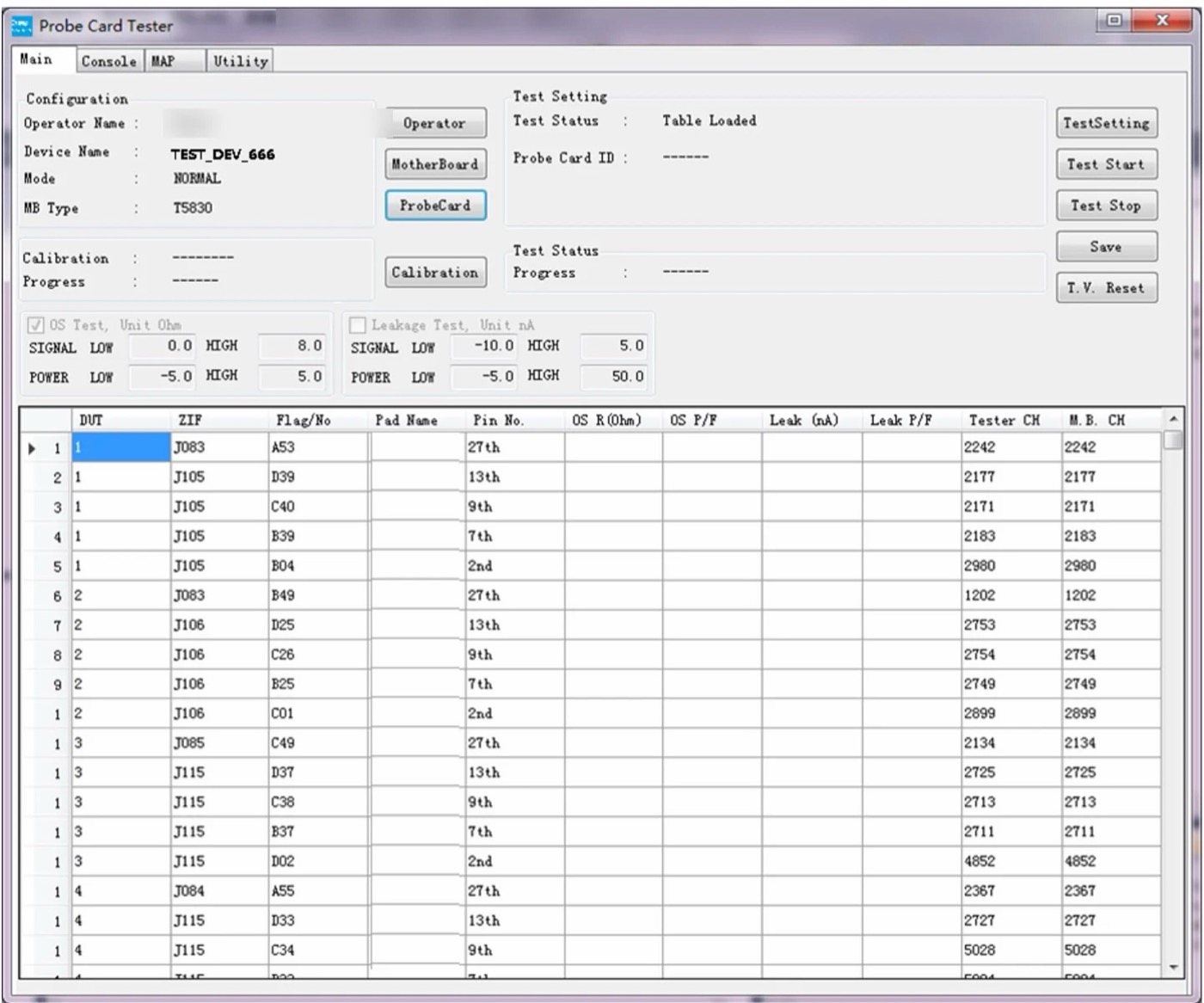
Every pin is recorded
The main test screen lists every pin by DUT, ZIF and pin position. Open resistance and leakage current are each judged once, producing a traceable report.
Whole-card touchdown and chuck force
On a whole-wafer touchdown, all pins of the card make contact at once. The total load depends on the number of pins in simultaneous contact, force per pin, overdrive and safety factor.
High-pin-count cards are limited by chuck force on general-purpose probers such as the UF3000 and P-12XL. DeepTouch1000 was developed for this, with a chuck force of 1,000 kgf, measured at full load.
Loaded in steps to 1,000 kgf, Z-axis straightness is < 0.2 µm. Chuck flatness deviation is ≤ 10 µm (3 mm stroke), and the three loading runs gave consistent results.
The final supported pin count is confirmed per card type and FAT/SAT plan.
Related products
Please provide card type, pin count and tester platform
We will acknowledge receipt within one business day.